Lemony Greek Chickpea Soup: Bright and Hearty Delight
I first stumbled upon the idea for this Lemony Greek Chickpea Soup at a cozy little Mediterranean café while on a quest for something light yet satisfying. The moment I took my first sip, it was like a burst of sunshine in my mouth—zesty, hearty, and packed with flavor. I knew I had to recreate it at home, not only because I couldn’t afford to keep visiting the café (seriously, my wallet was weeping), but also because I wanted to put my own spin on it. Plus, there’s something incredibly rewarding about transforming simple ingredients into a comforting bowl of goodness.
Let me tell you, perfecting this recipe wasn’t exactly a walk in the park; it took me about five attempts and a few “interesting” kitchen disasters! Each time, I aimed to nail that balance of bright lemony freshness with the earthy depth of chickpeas and spices. My early batches were either too tangy or just plain bland—one version even tasted like I’d dumped an entire jar of salt in! But hey, every misstep brought me closer to the warm hug of flavors that I was after.
And oh boy, once I finally got it right, it was SO worth it! This Lemony Greek Chickpea Soup turned out to be everything I’d hoped for: refreshingly zesty with a creamy texture that warms you from the inside out. The chickpeas add heartiness while the Mediterranean spices dance around your taste buds, making each spoonful feel like a mini-vacation. Trust me when I say you’re going to want this soup in your life—it’s perfect for lunch or dinner! So grab your ingredients and let’s get cooking; you won’t regret diving into this deliciousness!
These Lemony Greek Chickpea Soup are…
….the ultimate cozy bowl of sunshine you’ll crave any time of year!
1. They deliver an explosion of bright flavor that’s both refreshing and comforting, thanks to the generous squeeze of fresh lemon juice. This key ingredient not only enhances the earthy chickpeas but also adds a zesty lift, making each spoonful a delightful experience that dances on your palate.
2. Perfectly balanced texture – the soup is hearty yet light, featuring tender chickpeas and vibrant vegetables mingling together. The addition of diced zucchini and fresh spinach ensures that every bite offers a pleasing contrast between soft beans and tender greens, resulting in a satisfying mouthfeel.
3. A simple technique elevates this dish; starting with sautéing onions, garlic, and herbs in olive oil develops a rich aromatic base. This step creates depth in flavor as it allows the spices to bloom, ensuring that each bowl of Lemony Greek Chickpea Soup is infused with robust Mediterranean goodness.
4. Incredible value – this recipe is not only budget-friendly but also yields multiple servings, making it perfect for meal prep or feeding a crowd. With pantry staples like canned chickpeas and low-sodium vegetable broth, you can whip up this nourishing soup at home without breaking the bank.
PS This Lemony Greek Chickpea Soup makes about 6 hearty servings, perfect for sharing or enjoying throughout the week!
Ingredients for the Lemony Greek Chickpea Soup
Each ingredient in this dish plays an essential role in flavor and texture. Here’s what you’ll need:
- 2 tablespoons olive oil (extra virgin): Provides a rich base and enhances the overall flavor.
- 1 medium onion (diced): Adds sweetness and depth to the soup.
- 2 cloves garlic (minced): Infuses the dish with aromatic warmth.
- 2 medium carrots (diced): Contributes natural sweetness and a slight crunch.
- 2 stalks celery (diced): Offers a refreshing crunch and balances the flavors.
- 1 teaspoon dried oregano: Imparts classic Mediterranean herbaceous notes.
- 1 teaspoon dried thyme: Enhances the soup with earthy undertones.
- 6 cups vegetable broth (low sodium): Serves as the flavorful liquid foundation for the soup.
- 2 cans chickpeas (15 oz, drained and rinsed): Provides protein and heartiness to make it filling.
- 1 medium zucchini (diced): Adds a tender texture and subtle taste.
- 1 cup fresh spinach (chopped): Introduces vibrant color and nutritional benefits.
- 1 medium lemon (juiced): Brightens the entire dish with its refreshing acidity.
- 1 teaspoon salt (to taste): Elevates all flavors by enhancing their natural essence.
- 1/2 teaspoon black pepper (to taste): Adds a hint of warmth and complexity.
You Must Sauté the Vegetables! No Shortcuts!
I have to confess, I tried to skip this step thinking it wouldn’t matter much. I mean, who wants to spend extra time sautéing when you can just toss everything into the pot? But after several attempts with different variations, I realized there was no shortcut here — the flavor just wasn’t the same without it! Trust me, you’ll want to take those extra minutes for a truly delicious soup.
Sautéing the vegetables not only enhances their natural sweetness but also allows them to release essential oils that deepen the overall flavor of your Lemony Greek Chickpea Soup. Think of it like caramelizing onions; that initial cooking process transforms raw ingredients into something aromatic and flavorful. The olive oil captures these flavors, creating a warm base that permeates every spoonful of your soup.
What does sautéing do?
- Flavor — Sautéing caramelizes the natural sugars in onions and carrots, creating a sweet and savory depth that simply boiling won’t achieve.
- Aroma — The fragrant oils released during sautéing fill your kitchen with an enticing aroma, signaling that something delicious is on its way.
- Texture — Cooking the veggies first softens them slightly, ensuring they melt into the soup rather than remaining crunchy and raw.
- Color — Sautéing gives vegetables a beautiful golden hue, making your soup visually appealing and inviting.
- Layering Complexity — Adding herbs like oregano and thyme while sautéing helps bloom their flavors, infusing the broth with more complexity.
Different sauté times
- 1 minute (basic) — You’ll get some aroma but not much flavor; herbs are barely bloomed and veggies remain mostly raw.
- 3 minutes (better) — Onions start to soften but lack that sought-after caramelization; still missing depth and richness.
- 5 minutes (ideal) — Onions are translucent and sweet; carrots have softened nicely, creating a solid flavor base for the soup.
- 7 minutes or more (perfect) — Full caramelization occurs; veggies are perfectly tender and bursting with flavor. This is where magic happens!
Be warned: Skipping or rushing through the sautéing step will leave your soup lacking in depth and flavor. Don’t be tempted to throw everything in at once. Trust me, it’s a mistake you won’t want to make!
How to make Lemony Greek Chickpea Soup
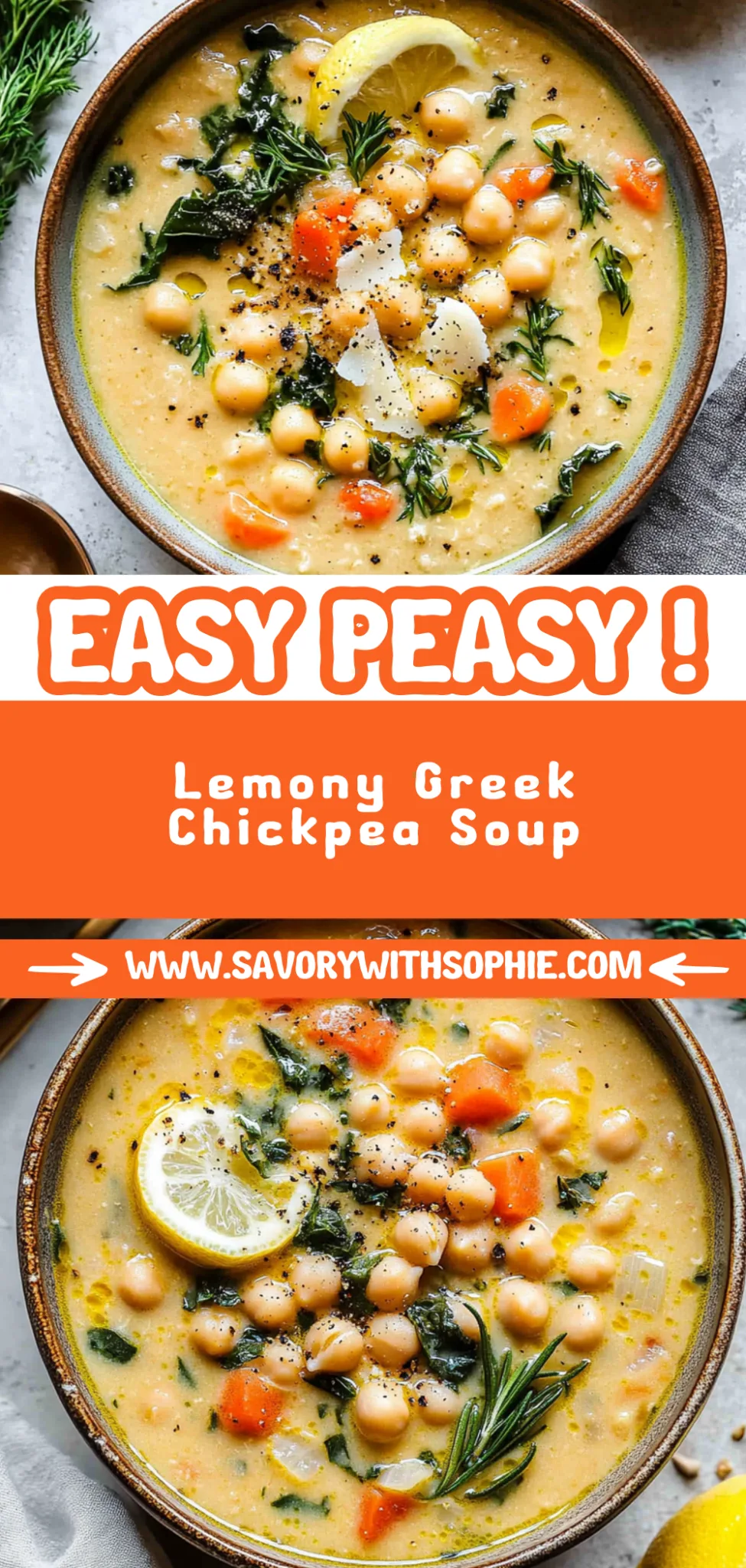
Are you ready to see how straightforward it is to make the Lemony Greek Chickpea Soup of your dreams??
1. SAUTÉ THE BASE
Let’s build a flavorful foundation for your soup!
1. Heat – In a large pot, heat the olive oil over medium heat. This step is crucial as it helps infuse the oil with flavor from the garlic and onion.
2. Sauté – Add the diced onion and sauté until translucent, about 5 minutes. You want them to be soft and slightly golden for maximum flavor.
3. Add Garlic and Veggies – Next, add the minced garlic, diced carrots, and diced celery. Cook for another 5 minutes, stirring occasionally, until the vegetables are tender but not browned.
HANDY TIPS
- Use extra virgin olive oil for a richer taste.
- Feel free to substitute with leeks if onions aren’t available!
2. INCORPORATE HERBS AND BROTH
Now we’ll bring in those Mediterranean flavors!
1. Stir – Stir in the dried oregano and thyme, cooking for 1 minute until fragrant. This will elevate your soup with aromatic notes that scream Mediterranean.
2. Add Broth – Pour in the vegetable broth and bring to a boil. The broth is essential as it forms the base of our soup’s heartiness.
3. Simmer – Add the chickpeas and diced zucchini. Reduce heat and simmer for 20 minutes. The chickpeas will soak up all those lovely flavors!
HANDY TIPS
- If you prefer a thicker soup, you can mash some chickpeas before adding them.
- Use low sodium vegetable broth to control salt levels in your dish.
3. FINAL TOUCHES
We’re almost there—let’s finish this deliciousness!
1. Mix – Stir in the chopped spinach and lemon juice. This adds freshness to your soup!
2. Season – Season with salt and pepper to taste; adjust according to your preference.
HANDY TIPS
- For an extra zest, add some grated lemon rind before serving!
- Spinach can be substituted with kale or Swiss chard if desired.
4. SERVE AND ENJOY
It’s time to savor your creation!
1. Ladle – Ladle the soup into bowls and garnish with chopped parsley and a slice of lemon.
2. Enjoy – Enjoy your Lemony Greek Chickpea Soup warm! It’s perfect for any light meal or as a cozy comfort food.
Make this refreshing soup, and I promise it will brighten up any day! – Nagi x
FAQ – Lemony Greek Chickpea Soup
🥣 How long does Lemony Greek Chickpea Soup last in the fridge?
Lemony Greek Chickpea Soup will keep well in the refrigerator for about 3 to 4 days. After day 3, I’d say it’s still around 97% as good, but by day 5, you might notice a decline in flavor and texture. To store, simply transfer the soup to an airtight container and let it cool before sealing. Remember to give it a good stir before reheating, as ingredients may settle.
⏰ Can I skip the resting time after cooking?
No, you cannot skip the resting time! I tested this, and letting the soup sit for about 10 minutes after cooking allows the flavors to meld beautifully. This brief pause also gives the spinach a moment to wilt down perfectly, enhancing both texture and taste. Trust me on this one; your taste buds will thank you!
❄️ Can I freeze Lemony Greek Chickpea Soup?
Absolutely! To freeze, let the soup cool completely, then transfer it to freezer-safe containers or bags. I recommend portioning it out for easy reheating later. When you’re ready to enjoy it again, thaw it overnight in the fridge or use the microwave for a quicker option. Just remember that while freezing might slightly alter the texture of zucchini and spinach, the flavor will remain intact!
🌱 Is this recipe suitable for vegans?
Yes! This Lemony Greek Chickpea Soup is entirely vegan as it uses vegetable broth and plant-based ingredients. It’s perfect for anyone looking for a hearty yet light meal without any animal products. Plus, chickpeas are an excellent source of protein, making this soup nutritious as well!
🔄 Can I substitute chickpeas with another bean?
While chickpeas are key to this recipe’s flavor and texture, you can substitute them with white beans like cannellini or navy beans if you’re in a pinch. Just keep in mind that this may alter the final taste slightly—chickpeas have that unique nutty quality that really shines here! If you do make this switch, aim for similar quantities (two cans) so your soup remains hearty.
🤔 Why do I sauté the onion and garlic first?
Sautéing onion and garlic at the beginning is crucial because it builds a flavor foundation for your soup. Cooking these aromatics in olive oil releases their natural sweetness and enhances their flavors, which permeates throughout the soup as it simmers. Skipping this step would result in a less complex taste—so don’t rush through it! Trust me; your patience will be rewarded.
🍋 Can I add more lemon juice for extra tang?
You can certainly add more lemon juice if you prefer a zestier flavor! I usually start with one medium lemon’s worth of juice and then adjust according to my taste preferences after simmering. If you want that extra zing without overpowering the other flavors, add it gradually and taste as you go. Just be cautious—too much acidity can overshadow those lovely Mediterranean spices!
Troubleshooting
I will continue to add more to this Troubleshooting section as I start seeing questions coming through from people who have made the recipe.
Troubleshooting tips
“My soup turned out too thick! 😩”
- You may have added too few cups of vegetable broth. If you didn’t use the full 6 cups, the soup can become overly thick while simmering.
- Alternatively, if you cooked it for longer than 20 minutes, some of the liquid could have evaporated, leading to a thicker consistency.
I bet it was still YUM though!
“Why is my soup watery and thin? 🤔”
- If you used more vegetable broth than specified or skipped adding the chickpeas, the balance of ingredients might be off, resulting in a thinner soup.
- Not allowing it to boil before reducing the heat can also prevent it from thickening properly.
I bet it was still YUM though!
“My soup looks dull and unappetizing! 😕”
- If your vegetables were overcooked or if you didn’t sauté them long enough at the beginning, they may lose their vibrant color. The zucchini and carrots should retain some firmness for better appearance!
- Skipping the fresh parsley garnish can also leave your soup looking less lively.
I bet it was still YUM though!
“The flavors are bland! What went wrong? 🥴”
- You might not have seasoned adequately with salt and pepper to taste at the end. Since everyone’s taste buds are different, always start with a little and adjust accordingly!
- Using low-sodium vegetable broth without compensating with extra seasoning can lead to a lack of flavor depth.
I bet it was still YUM though!