Best Greek Salad Recipe: Fresh and Flavorful Delight
I first fell in love with Greek salad during a trip to a quaint little taverna in Santorini, where the sun-kissed tomatoes tasted like they were picked just moments before hitting my plate. Each bite was a burst of freshness, enhanced by creamy feta and briny olives that danced together beautifully. I knew I had to recreate this at home—not just for the nostalgia, but also because I wanted to enjoy it anytime without shelling out a fortune or waiting for a table. Plus, let’s be honest, there’s something incredibly satisfying about making a dish better than what you had at a restaurant.
After countless attempts—seriously, I lost count after six—I finally nailed my Best Greek Salad Recipe. At first, I was just trying to get the dressing right; I must’ve mixed lemon juice and olive oil so many times that my kitchen smelled like an Italian citrus grove! Each iteration brought me closer to that perfect balance of tangy and savory, but it wasn’t until I started experimenting with the vegetables’ textures and colors that everything clicked. Who knew choosing between cucumbers or bell peppers could be so dramatic?
But oh boy, was it worth every minute spent chopping and tossing! The final result is nothing short of spectacular: vibrant, crisp vegetables mingling with creamy feta and those delightful olives—all drizzled with a simple yet zesty olive oil and lemon vinaigrette. The crunch from the fresh veggies combined with the smoothness of the cheese makes each bite an adventure. Trust me when I say you’ll want to whip this up for gatherings or just as a refreshing side on a warm day. So grab your ingredients and let’s dive into making this amazing Greek salad together—I can’t wait for you to taste it!
These Best Greek Salad Recipe are….
….the quintessential embodiment of fresh flavors and vibrant colors that truly celebrate Mediterranean cuisine!
1. They feature a burst of freshness that comes from the cherry tomatoes, which are at their sweetest when halved and mixed in. This natural sweetness balances beautifully with the tangy feta and briny olives, creating a flavor explosion that’s both refreshing and satisfying.
2. The crunchy texture is elevated by the crisp cucumber and bell pepper, providing a delightful contrast to the creaminess of the feta cheese. Each bite offers a satisfying crunch that makes this salad not just tasty but also incredibly enjoyable to eat.
3. The simple yet effective technique of slicing the red onion thinly ensures that it infuses its sharp flavor without overpowering the other ingredients. By letting them soak in the dressing for a few minutes before serving, you soften their bite, allowing them to harmonize perfectly with the other fresh vegetables.
4. It’s an affordable dish that showcases seasonal produce, making it not only delicious but also budget-friendly. You can easily find these ingredients at your local grocery store or farmers’ market, and they come together quickly for a wholesome meal that won’t break the bank.
PS This salad serves about 4 as a side dish, making it perfect for gatherings or meal prep throughout the week!
Ingredients for the Best Greek Salad Recipe
Each ingredient in this dish plays an essential role in flavor and texture. Here’s what you’ll need:
2 cups cherry tomatoes (halved): These provide a burst of sweetness and juiciness.
1 cucumber (diced): Adds a refreshing crunch that’s essential to the salad’s texture.
1 cup red onion (thinly sliced): Offers a sharp, aromatic bite that complements the other flavors.
1 cup green bell pepper (diced): Brings a crispness and mild sweetness to balance the salad.
1 cup feta cheese (crumbled): Delivers a creamy, tangy richness that ties everything together.
1/2 cup kalamata olives (pitted and halved): Introduces a briny depth that enhances the overall taste.
1/4 cup extra virgin olive oil: Acts as a luscious base for the dressing, enriching every bite.
2 tablespoons red wine vinegar: Provides a tangy acidity that brightens the salad’s flavors.
1 teaspoon dried oregano (preferably Greek): Infuses an earthy, aromatic note reminiscent of Mediterranean cuisine.
1 clove garlic (minced): Adds a subtle kick of warmth and depth to the dressing.
to taste salt: Enhances all the natural flavors of the ingredients.
to taste black pepper: Adds a gentle heat and complexity to the dish.
The Secret to Perfectly Mixed Vegetables? It Takes Patience!
I know, I know—tossing vegetables sounds so simple, yet I tried to rush through this step and quickly learned that patience is key. I thought I could save time by just throwing everything together without a gentle touch, but trust me, it was a disaster. My salad ended up a mushy mess that tasted more like regret than refreshment!
Why is taking the time to toss the vegetables gently so crucial? Think of it like giving each ingredient its moment in the spotlight. When you combine the cherry tomatoes, cucumber, red onion, and green bell pepper with care, you’re allowing the flavors to dance together rather than fighting for attention. This gentle mixing ensures that every bite of your Greek salad is as vibrant and fresh as it should be.
What does gentle tossing do?
- Flavor distribution: Ensures that every vegetable gets coated with dressing, enhancing the overall taste.
- Texture contrast: Prevents ingredients like tomatoes from crushing while allowing crunchier veggies like cucumbers and peppers to maintain their bite.
- Visual appeal: Keeps the salad looking fresh and colorful instead of a sad, soggy pile of ingredients.
- Integrity of feta: Allows feta cheese to stay intact instead of disintegrating into a creamy mess throughout the salad.
- Freshness retention: Gently tossed salads hold up better over time compared to ones that are aggressively mixed, meaning your leftovers will still taste great!
Different tossing intensities
- Gentle toss (excellent) — Each ingredient stays whole and retains its unique texture and flavor; the salad looks beautiful.
- Moderate toss (good) — Ingredients are combined well but some tomatoes may burst; still tasty but not ideal visually.
- Aggressive toss (poor) — Most ingredients lose their shape; tomatoes turn into mush and feta crumbles everywhere—no one wants that!
- No toss at all (disaster) — A chaotic mix of uncoordinated flavors; you might as well have just dumped everything on your plate.
Be warned: the most common mistake people make is being too rough when tossing the ingredients! Don’t crush those beautiful cherry tomatoes or break apart your lovely feta cheese. A gentle hand goes a long way in keeping your Greek salad fresh and vibrant.
How to make Best Greek Salad Recipe
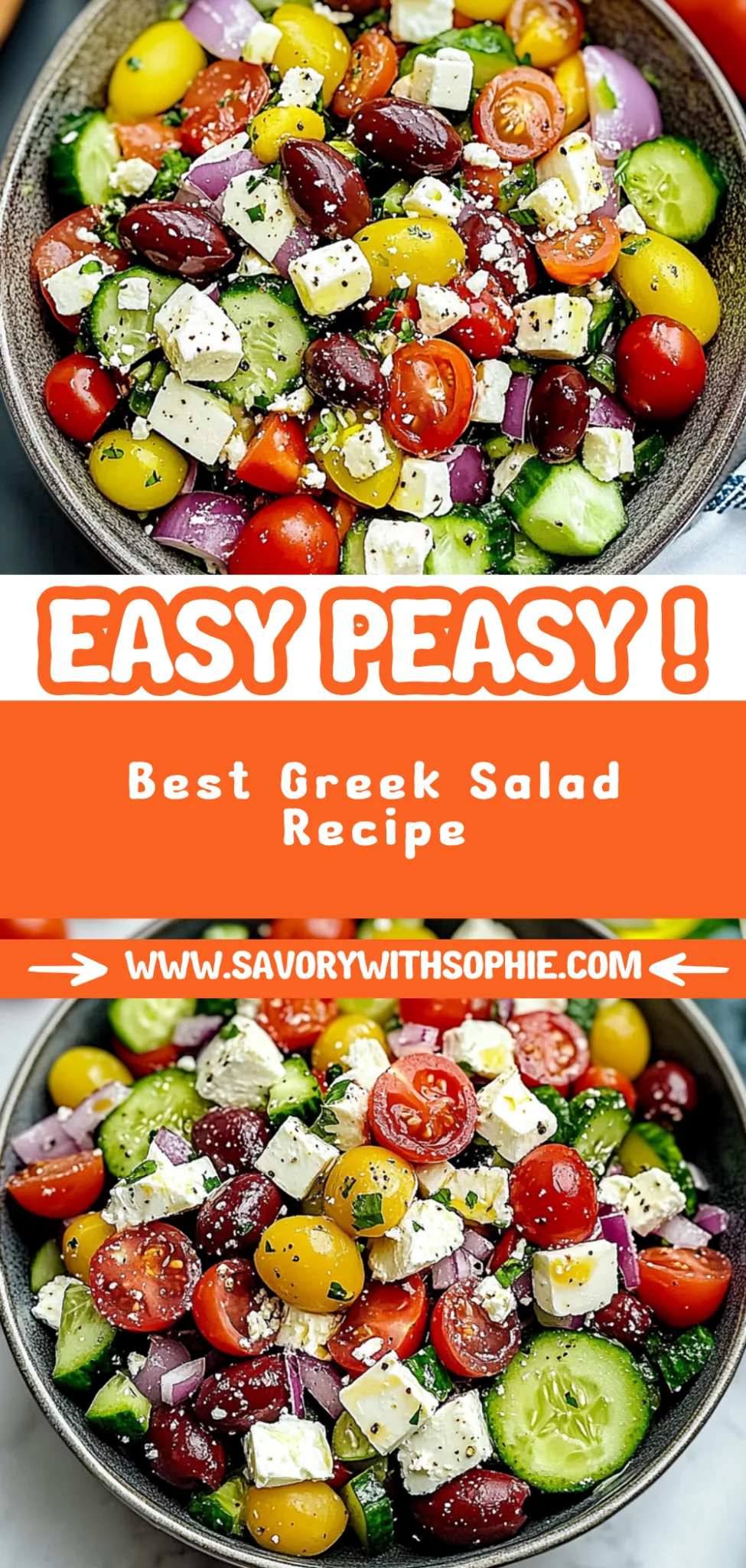
Are you ready to see how straightforward it is to make the Best Greek Salad Recipe of your dreams??
1. PREPARE THE VEGETABLES
Get ready to chop and mix! This phase sets the vibrant foundation of your salad.
1. Combine – In a large mixing bowl, combine the halved cherry tomatoes, diced cucumber, thinly sliced red onion, and diced green bell pepper. The colorful medley will create a visually appealing salad that’s as delightful to look at as it is to eat!
2. Toss – Gently toss the vegetables together to mix them evenly. This step ensures every bite bursts with flavor from each component.
HANDY TIPS
- Use ripe cherry tomatoes for maximum sweetness; they can really elevate the salad!
- For a crunchier texture, consider leaving the cucumber skin on.
2. ADD CHEESE AND OLIVES
Time to add that creamy feta and briny olives for an authentic Greek touch!
3. Add – Carefully add the crumbled feta cheese and halved kalamata olives to the vegetable mixture. These ingredients bring richness and depth, making your salad truly memorable.
4. Toss Gently – Gently toss everything together again, being careful not to break up the feta too much. You want those lovely chunks of cheese intact for optimal creaminess in every bite!
HANDY TIPS
- If you prefer a stronger feta flavor, opt for feta packed in brine instead of oil.
- Substitute with other olives if you like; green olives also work well!
3. MAKE THE DRESSING
The dressing is where the magic happens—simple yet flavorful!
5. Whisk Together – In a small bowl, whisk together the extra virgin olive oil, red wine vinegar, dried oregano, minced garlic, salt, and black pepper until well combined. This vinaigrette will enhance all your ingredients without overshadowing them.
6. Taste and Adjust – Taste your dressing and adjust seasoning if necessary. A hint more salt or lemon can make a world of difference—don’t be afraid to customize!
HANDY TIPS
- Use fresh oregano if you have it; it adds an aromatic freshness that dried can’t match.
- Letting the dressing sit for about 5 minutes before using allows the flavors to meld beautifully.
4. COMBINE AND SERVE
Almost there! Time to bring it all together.
7. Pour Dressing – Pour the dressing over the salad mixture and toss gently to coat all ingredients evenly. This simple act is what ties all those wonderful flavors together into one delicious dish!
8. Serve – Serve immediately or refrigerate for 30 minutes to allow flavors to meld together even further—if you can wait that long! The longer it sits, the more delicious it becomes as everything blends.
Make this Best Greek Salad Recipe once, and I wager it will become a staple in your home—freshness in every bite! Enjoy this burst of Mediterranean goodness! – Nagi x
FAQ – Best Greek Salad Recipe
🥗 How long will this Greek salad keep in the fridge?
Greek salad is best enjoyed fresh, but if you have leftovers, it can be stored in the fridge for about 2 days. On day one, it will be at its freshest, maintaining about 97% of its original quality. By day two, the vegetables might start to lose their crunch, and the flavors may become a bit muted, dropping to around 85%. To keep it as fresh as possible, store it in an airtight container and avoid adding the dressing until just before serving.
⏳ Do I really need to let the salad sit before serving?
Yes, I highly recommend letting the salad sit for at least 30 minutes after mixing in the dressing. This resting period allows all those vibrant flavors to meld together beautifully, enhancing the overall taste of the salad. If you’re short on time, you can skip this step, but trust me—your taste buds will thank you if you let it sit!
❄️ Can I freeze Greek salad for later use?
Freezing Greek salad is not recommended. The texture of vegetables like cucumbers and tomatoes changes dramatically when frozen, turning mushy upon thawing. However, if you want to prepare ahead of time, consider prepping all your vegetables and storing them separately from the dressing. Combine them when you’re ready to serve for a fresher taste!
🌾 Is there a way to make this Greek salad gluten-free?
Absolutely! This Greek salad is naturally gluten-free since none of the ingredients contain gluten. Just ensure that any added components or toppings (like croutons) are also gluten-free. It’s a delightful option for those with dietary restrictions!
🧀 Can I substitute feta cheese with something else?
If you’re looking to substitute feta cheese due to dietary constraints or personal preference, try using goat cheese or even a dairy-free cheese alternative. Both options will provide a different flavor profile—goat cheese offers creaminess while dairy-free options can give a unique twist without dairy’s tanginess. However, do keep in mind that these substitutes may not yield exactly the same taste or texture as traditional feta.
🔪 Why should I toss the vegetables gently during preparation?
Gently tossing the vegetables helps maintain their structural integrity and prevents them from becoming mushy. Overmixing can break down delicate ingredients like cherry tomatoes and feta cheese—resulting in a less appealing texture. The goal is to combine everything while keeping each piece intact for that perfect crunch in every bite!
💡 Can I customize this Greek salad with extra ingredients?
Definitely! One of my favorite things about Greek salad is its versatility. You could add ingredients like artichoke hearts, chickpeas for protein, or even some pepperoncini for an extra kick of flavor! Just remember that if you venture too far from classic ingredients, you might end up with a different dish entirely—but hey, culinary experimentation is part of the fun!
Troubleshooting
I will continue to add more to this Troubleshooting section as I start seeing questions coming through from people who have made the recipe.
Troubleshooting tips
“My salad is too watery! 😩”
- This could be caused by using overripe cherry tomatoes. When tomatoes are too ripe, they release more juice, making the salad watery.
- Another possibility is that you didn’t drain the cucumber properly after dicing it; cucumbers can hold a lot of water.
- I bet it still tasted refreshing, even if it was a bit soupy!
“My feta crumbled into tiny pieces! 😱”
- You may have tossed the salad too vigorously after adding the feta cheese. Feta is quite soft and can easily break apart if handled roughly.
- Alternatively, if you used pre-crumbled feta, it might not have the same texture compared to freshly crumbled cheese, leading to a finer crumble.
- But hey, tiny feta bits are still packed with flavor!
“My salad looks dull and lifeless! 😕”
- If your vegetables were not fresh or were cut too far in advance, they might lose their vibrant color and crispness. Freshness is key for a bright Greek salad!
- Also, not enough dressing could lead to a bland appearance; make sure you’re coating all the ingredients well.
- Even with its dull look, I bet it was still delicious!
“The olives overwhelmed the salad! 🥴”
- If you used too many kalamata olives or didn’t balance them well with other ingredients, their strong flavor can take over the dish.
- Be mindful of how much salt you add when dressing your salad; olives already have salt, which can intensify overall saltiness.
- At least you had that tasty olive punch in every bite!