Sourdough Monkey Bread: Irresistibly Gooey Delight
I first fell in love with the idea of Sourdough Monkey Bread when I stumbled upon a charming little bakery during a weekend getaway. The moment I took my first bite of their warm, pull-apart bread, coated in a heavenly cinnamon sugar crust, I knew I had to recreate that bliss at home. There’s something so special about sharing food that brings people together, and honestly, who wouldn’t want to whip up something that tastes this good without breaking the bank? Plus, there’s always that desire to make it even better than what you had out—because let’s face it, homemade is always where the magic happens.
Now, perfecting my Sourdough Monkey Bread was no walk in the park. I spent an embarrassing amount of time—think days instead of hours—tweaking my recipe until it was just right. There were plenty of flops: loaves that were too dense, or worse, overly chewy (which is not the vibe we’re going for!). With each iteration, I aimed for that ideal balance of soft dough and crispy edges, making sure every piece was coated in just the right amount of cinnamon sugar. Let’s just say I became well-acquainted with my kitchen scale and measuring cups!
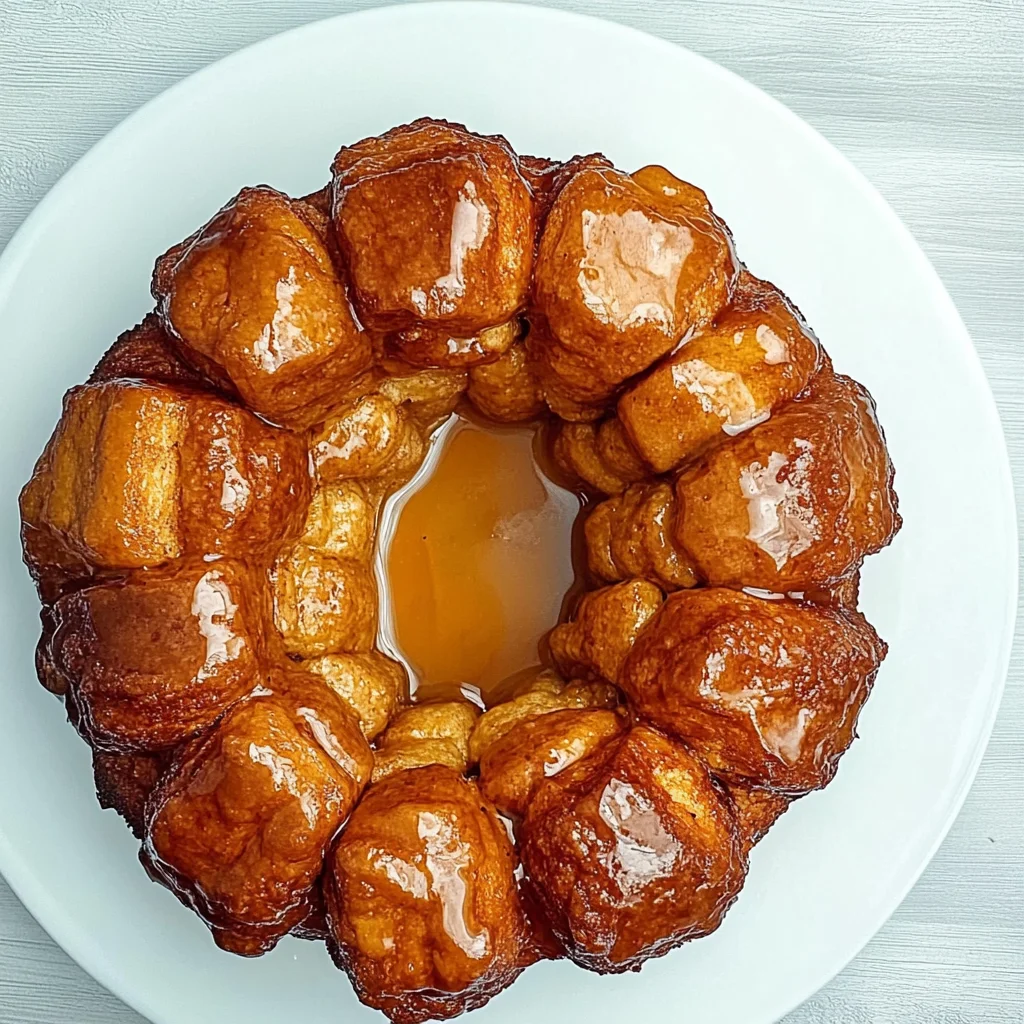
But trust me when I say it was more than worth all those test runs! The final result is a showstopper: a delightful pull-apart bread made with sourdough that’s fluffy on the inside yet perfectly caramelized on the outside. Each bite bursts with warm cinnamon flavor and the satisfying crunch of sugar that makes it impossible to resist. So gather your friends or family and dig into this gorgeous creation—I can’t wait for you to experience the joy of Sourdough Monkey Bread as much as I did!
These Sourdough Monkey Bread are…
…a deliciously indulgent treat that will elevate your snack game to a whole new level!
1. They deliver an irresistible flavor with a warm, complex sweetness that comes from the tangy notes of the sourdough starter. This unique ingredient not only adds depth but also balances perfectly with the cinnamon sugar coating, creating a delightful contrast that keeps you coming back for more.
2. Incredible pull-apart texture – soft and fluffy on the inside with just the right amount of chewiness. The combination of warm milk and active sourdough starter helps create a tender dough that bakes up beautifully, making each piece a satisfying bite.
3. A key technique is using an active sourdough starter, which ferments the dough and introduces natural leavening. This not only enhances the flavor profile but also contributes to a light and airy structure that sets this monkey bread apart from conventional recipes.
4. Cost-effective indulgence – by making this Sourdough Monkey Bread at home, you save money compared to store-bought options while enjoying superior freshness. With just a few simple ingredients like flour and your bubbly starter, you can create a show-stopping treat that’s perfect for sharing without breaking the bank.
PS This recipe yields a generous batch of pull-apart goodness, perfect for parties or cozy family gatherings!
Ingredients for the Sourdough Monkey Bread
Each ingredient in this dish plays an essential role in flavor and texture. Here’s what you’ll need:
Dough
3 cups sourdough starter (active and bubbly): Provides a tangy flavor and helps the dough rise beautifully.
1 cup all-purpose flour (for dough): Builds the structure and gives the monkey bread its delightful chewiness.
1 cup milk (warm): Activates the yeast and enriches the dough for a soft crumb.
1 tablespoon sugar (optional): Adds a hint of sweetness to balance the sourness of the starter.
1 teaspoon salt: Enhances overall flavor and strengthens the dough’s gluten structure.
Coating
1 cup granulated sugar: Creates a sweet, crunchy exterior that complements the warm bread.
2 tablespoons ground cinnamon: Infuses warm, aromatic spice that elevates each pull-apart piece.
1/2 cup unsalted butter (melted): Binds the coating ingredients together while adding richness.
You Must Let the Dough Rise! No Shortcuts!
I’ll be honest with you — I tried to cut corners here. I thought, “Surely, I can skip the rising time!” But after several batches of sad, flat monkey bread, I learned my lesson the hard way. The dough needs that time to rise — so much so that I’m now a self-proclaimed advocate for patience in baking!
Why is letting the dough rise non-negotiable? Think of it like this: when yeast meets warm milk and sugar in your sourdough starter, it’s like throwing a party for all those microorganisms. They feast, multiply, and create gases that make your dough fluffy and light. Without that essential rising period, you’re left with dense little balls of disappointment instead of the pillowy bites we crave in monkey bread.
What does letting the dough rise do?
- Flavor development — The longer fermentation allows the sourdough flavors to develop fully; this results in a depth of taste that you just can’t rush.
- Texture improvement — A proper rise creates an airy structure, resulting in soft and chewy pieces that pull apart perfectly.
- Better leavening — Gases produced during fermentation help create air pockets, making each bite light rather than heavy.
- Enhanced browning — The sugars formed during fermentation contribute to a richer color when baked, giving your monkey bread that irresistible golden hue.
- Overall moisture retention — A well-risen dough holds onto moisture better during baking, ensuring your monkey bread stays soft and doesn’t dry out quickly.
Different rising times
- 1 hour (fair) — This is the bare minimum; your dough will rise but won’t achieve its full potential. Expect a denser texture and less flavor.
- ⭐️ 2 hours ⭐️ — Optimal! The dough puffs up nicely, resulting in fluffy bites bursting with delicious sourdough flavor.
- Beyond 2 hours — You risk over-proofing if you leave it too long; it can become too airy and collapse upon baking.
Remember: not allowing enough time for the dough to rise is a common mistake. If you’re tempted to rush this step, I urge you not to! Patience is key to achieving that perfect pull-apart texture and flavor explosion in your Sourdough Monkey Bread.
How to make Sourdough Monkey Bread

Are you ready to see how straightforward it is to make the Sourdough Monkey Bread of your dreams??
1. PREPARE THE DOUGH
Let’s start by creating that delicious, fluffy dough that will be the star of your monkey bread!
1. COMBINE – In a large mixing bowl, combine the sourdough starter, warm milk, sugar, and salt. Make sure your sourdough starter is active and bubbly for the best results; this will give your dough a lovely rise!
2. ADD FLOUR – Gradually add the flour until a soft dough forms. The dough should be slightly tacky but still manageable — you want it to hold together well without being overly sticky.
3. KNEAD – Knead the dough on a floured surface for about 5 minutes until smooth. This step develops the gluten, giving your monkey bread its perfect structure.
4. RISE – Cover the bowl with a cloth and let it rise for 1-2 hours until doubled in size. You’ll know it’s ready when it has roughly doubled and feels airy and light to the touch!
HANDY TIPS
- If your kitchen is cool, place the bowl in a slightly warmed oven (turned off) to encourage rising.
- For extra flavor, add herbs or spices to the dough if you’re feeling adventurous!
2. COAT THE DOUGH
Now comes the fun part — coating those little dough balls in buttery cinnamon goodness!
5. PREHEAT – Preheat the oven to 350°F (175°C). A hot oven helps achieve that golden crust we’re aiming for!
6. MIX CINNAMON SUGAR – In a separate bowl, mix the granulated sugar and cinnamon together until well combined. This will create an irresistible coating for your dough balls!
7. PINCH AND ROLL – Once the dough has risen, pinch off small pieces and roll them into balls about the size of a golf ball. Don’t worry about making them perfect; they’ll rise beautifully in the oven!
8. DIP IN BUTTER – Dip each ball in melted butter, then roll in the cinnamon sugar mixture until fully coated. This step not only adds flavor but ensures that each piece pulls apart easily later on!
9. LAYER IN PAN – Layer the coated dough balls in a greased Bundt pan, stacking them as you go. The more compact they are, the more they will rise together into that iconic monkey bread shape!
HANDY TIPS
- Use unsalted butter so you can control the saltiness of your final product.
- Want to get fancy? Add some chopped nuts or chocolate chips between layers for extra texture!
3. BAKE THE MONKEY BREAD
It’s almost time to enjoy your creation — just one last step!
10. BAKE – Bake in the preheated oven for 25-30 minutes until golden brown and fragrant throughout your kitchen! You’ll know it’s done when it sounds hollow when tapped lightly on top.
11. COOL BRIEFLY – Remove from the oven and let it cool for 10 minutes before inverting onto a plate. Trust me; this is worth waiting for as it helps maintain its shape!
12. SERVE WARM – Serve warm and enjoy pulling apart all those delightful pieces with friends or family!
HANDY TIPS
- For an extra gooey texture, brush with more melted butter right after baking.
- This monkey bread is best enjoyed fresh but can be stored covered at room temperature for up to two days!
Make this Sourdough Monkey Bread once, and I guarantee it will become a beloved favorite that brings everyone together around the table! Enjoy every delicious pull-apart bite! – Nagi x
FAQ – Sourdough Monkey Bread
🥖 How long will Sourdough Monkey Bread keep?
Sourdough Monkey Bread is best enjoyed fresh out of the oven, but if you have leftovers, they can be stored at room temperature for about 2 days. After that, the quality decreases significantly—around 90% as good on day 3 and down to about 80% by day 4. To store, simply cover it with a clean cloth or plastic wrap to keep it from drying out. If you prefer to enjoy it later, I recommend freezing it instead!
❄️ Can I freeze Sourdough Monkey Bread?
Absolutely! You can freeze Sourdough Monkey Bread before or after baking. If freezing before baking, wrap the shaped dough tightly in plastic wrap and place it in an airtight container; it can be frozen for up to 3 months. When you’re ready to bake, let it thaw in the refrigerator overnight and then proceed with baking as usual. If you’ve already baked it, let the bread cool completely before wrapping and freezing. When ready to eat, just reheat it in a warm oven until heated through.
🌾 Can this recipe be made gluten-free?
Unfortunately, no. I’ve tested various gluten-free flours with this recipe, and I found that they don’t provide the same texture or rise as all-purpose flour. The dough needs gluten to develop properly during kneading and baking, which is crucial for that delightful pull-apart texture. However, if you’re looking for a gluten-free bread alternative, I’d recommend trying a dedicated gluten-free monkey bread recipe that’s formulated specifically for those flour types.
🍯 Can I reduce the sugar or substitute it with sweeteners?
Nope! I tried various sugar reductions and substitutes like honey and agave syrup, but they just don’t work well in this recipe. Reducing the sugar affects not only the sweetness but also how the dough rises and browns during baking. For optimal flavor and texture, stick with the full amount of granulated sugar specified in the coating—trust me; your taste buds will thank you!
🤔 Why do I need to let the dough rise?
Letting the dough rise is essential for developing that light and airy texture we adore in Sourdough Monkey Bread. During this time, yeast activity creates carbon dioxide bubbles that expand the dough. Skipping this step might result in dense bread rather than fluffy pull-apart goodness! I always recommend covering your bowl with a cloth to keep moisture in while your dough rises for about 1-2 hours until it’s doubled in size.
🔄 Can I add different flavors or fillings to the monkey bread?
Definitely! The beauty of Sourdough Monkey Bread lies in its versatility. You can mix things up by adding chocolate chips, nuts (like pecans or walnuts), or even dried fruits like raisins along with your cinnamon-sugar coating. Just remember to keep any additional ingredients balanced so they don’t overpower the classic flavor profile—after all, we want that cinnamon-sugar goodness to shine through!
🍶 What kind of milk should I use for this recipe?
I prefer using whole milk because it adds richness and moisture to the dough, which helps achieve a soft texture. However, you can also use low-fat milk or even non-dairy alternatives like almond or oat milk if needed—just make sure they’re warm when added to help activate your sourdough starter properly! Whatever you choose, it’ll still be deliciously satisfying in its own right!
Troubleshooting
I will continue to add more to this Troubleshooting section as I start seeing questions coming through from people who have made the recipe.
Troubleshooting tips
“My monkey bread turned out too dense! 😩”
- Your sourdough starter may not have been active enough. A bubbly, vigorous starter is essential for proper rise and texture; if it’s not lively, it can lead to a denser dough.
- You might have added too much flour while kneading. If the dough feels stiff rather than soft and pliable, it can create a heavy texture instead of the light pull-apart bread we’re aiming for.
- I bet it still tasted delicious, though!
“The dough didn’t rise at all! What went wrong? 😟”
- If your warm milk was too hot, it could have killed the yeast in your sourdough starter, preventing any rise. Aim for a temperature around 110°F (43°C) — just warm enough to activate without being scalding.
- Alternatively, if your kitchen is too cold, the rising process could take longer or stall altogether. An ideal environment is warm and draft-free; consider placing the bowl in a slightly warmed oven (turned off) during rising.
- Even if it didn’t puff up, I bet it was still YUM in its own way!
“My monkey bread came out way too wet! 😳”
- If you didn’t measure your flour accurately, adding less than 1 cup can result in a sticky dough that won’t hold its shape while baking. Make sure to spoon and level your flour for accuracy.
- Not kneading the dough long enough can also lead to excess moisture remaining trapped in the dough. Aim for about 5 minutes of kneading until it’s smooth and elastic.
- Even with a little extra gooeyness, I’m sure it was still tasty!
“The bottom burned but the top stayed pale! 🔥”
- If your Bundt pan wasn’t greased well enough, the bottom may have cooked faster than the rest of the bread due to uneven heat distribution; ensure you coat every crevice generously next time!
- Baking at an incorrect oven temperature can also cause uneven cooking. Make sure to use an oven thermometer for accuracy; sometimes ovens run hot or cool.
- Regardless of its look, I bet those flavors were still on point!
“The pieces are falling apart instead of pulling apart! 🤔”
- If you didn’t let the dough rise long enough before baking, there may not have been sufficient gluten development, leading to a lack of structure in your monkey bread.
- Overbaking can also cause the dough to dry out and become crumbly instead of soft and chewy. Keep an eye on it toward the end of baking to ensure perfect golden brown pieces.
- It might not win any beauty contests, but I bet it was still super delicious!
Sourdough Monkey Bread
Ingredients
Method
- In a large mixing bowl, combine the sourdough starter, warm milk, sugar, and salt.
- Gradually add the flour until a soft dough forms.
- Knead the dough on a floured surface for about 5 minutes until smooth.
- Cover the bowl with a cloth and let it rise for 1-2 hours until doubled in size.
- Preheat the oven to 350°F (175°C).
- In a separate bowl, mix the granulated sugar and cinnamon.
- Once the dough has risen, pinch off small pieces and roll them into balls.
- Dip each ball in melted butter, then roll in the cinnamon sugar mixture.
- Layer the coated dough balls in a greased Bundt pan.
- Bake in the preheated oven for 25-30 minutes until golden brown.
- Remove from the oven and let it cool for 10 minutes before inverting onto a plate.
- Serve warm and enjoy pulling apart the pieces.