Quick and Flavorful Beef Black Pepper Udon: Easy Delight
I first stumbled upon the idea for Quick and Flavorful Beef Black Pepper Udon while dining at a cozy little noodle shop that I had heard rave reviews about. The moment I took my first bite, the tender beef paired with those chewy udon noodles, drenched in a bold black pepper sauce, was a flavor explosion I just couldn’t forget! It sparked a craving that had me dreaming of recreating this dish at home, especially since dining out can get pricey and honestly, who doesn’t love the satisfaction of making something better than what you’d find in a restaurant?
It took me several attempts—let’s just say I may have gone through more packs of udon noodles than I’m proud to admit—to perfect my version of this dish. Each round was a mix of trial and error; tweaking the sauce here, trying different cuts of beef there, all while battling my kitchen disasters (I’m talking about a few epic stir-frying fails). I was determined to nail down that perfect balance of flavors and textures that made this dish so special in the first place!
But boy, was it worth it! The final result is nothing short of delicious—think tender strips of beef nestled among those perfectly chewy udon noodles, all enveloped in that irresistible black pepper sauce that packs a punch without being overpowering. The texture is spot on, and the flavors are bold yet comforting, making it the kind of meal you’ll want to whip up again and again. Trust me when I say, you’re going to love this Quick and Flavorful Beef Black Pepper Udon as much as I do—get ready for an incredibly satisfying dinner!
These Quick and Flavorful Beef Black Pepper Udon are…
….the ultimate quick-fix meal that bursts with flavor and satisfaction!
1. They pack a bold, peppery punch that elevates the entire dish, thanks to the generous use of freshly ground black pepper. This key ingredient not only enhances the beef’s natural richness but also brings a depth of flavor that makes every bite memorable.
2. Irresistible chewiness – the udon noodles offer a delightful contrast to the tender beef, creating a satisfying mouthfeel. Their unique texture comes from being made fresh or frozen, ensuring they remain perfectly chewy when cooked, making for a truly enjoyable eating experience.
3. Quick cooking technique – searing the beef at high heat achieves that perfect caramelization while keeping it juicy and tender. This method is essential in maximizing flavor and ensuring your Quick and Flavorful Beef Black Pepper Udon comes together in just 20 minutes.
4. Incredible value – making this dish at home is not just easy but cost-effective too! With simple ingredients like bell peppers and broccoli, you can whip up a restaurant-quality meal without breaking the bank, plus it’s ready in no time.
PS This recipe yields about 4 servings, making it perfect for a weeknight dinner or meal prep!
Ingredients for the Quick and Flavorful Beef Black Pepper Udon
Each ingredient in this dish plays an essential role in flavor and texture. Here’s what you’ll need:
12 oz beef sirloin (thinly sliced): Provides tender bites that enhance the dish’s heartiness.
14 oz udon noodles (fresh or frozen): Offers a chewy texture that perfectly absorbs the sauce.
2 tbsp vegetable oil (for cooking): Ensures even cooking and adds subtle richness.
1 cup bell pepper (sliced): Brings sweetness and vibrant color to the dish.
1 cup broccoli florets (fresh or frozen): Adds crunch and a nutritious element.
3 tbsp soy sauce: Delivers a savory depth that complements the beef beautifully.
2 tbsp black pepper (freshly ground): Infuses a bold kick that elevates the overall flavor.
1 tbsp oyster sauce: Introduces umami richness, enhancing the savory notes.
1 tbsp sesame oil: Adds a nutty aroma that rounds out the dish’s flavors.
1 tbsp cornstarch (mixed with 2 tbsp water): Acts as a thickening agent to give the sauce a luscious consistency.
Slicing the Beef Thinly Against the Grain is Non-Negotiable. Here’s Why!
I’ll admit it — I thought I could get away with cutting corners when it came to slicing the beef for this dish. I tried to skip the “slicing against the grain” step, thinking it wouldn’t make that much of a difference. Spoiler alert: I was wrong! The difference between tender, melt-in-your-mouth beef and chewy strips you want to avoid is all in how you slice it.
When you slice beef against the grain, you’re effectively shortening those long muscle fibers, which is what makes each bite more tender. Think of it like pulling apart a piece of cooked spaghetti; if you cut through it cleanly, it stays nice and soft, but if you tear it haphazardly, you end up with a tangled mess. For this Quick and Flavorful Beef Black Pepper Udon, properly sliced beef means that every mouthful is juicy and succulent, perfectly complementing those chewy udon noodles.
What does slicing against the grain do?
- Tenderness — Cutting against the grain shortens muscle fibers, making each bite significantly softer and easier to chew.
- Flavor absorption — Smaller pieces allow for better marination and sauce absorption, enhancing the overall flavor of your beef.
- Visual appeal — Neatly sliced beef looks more appetizing on your plate, elevating the presentation of your dish.
- Cooking uniformity — Uniform slices cook evenly, ensuring that no piece is overcooked or undercooked in your stir-fry.
- Texture harmony — When paired with chewy udon noodles, tender beef provides a delightful contrast in textures that makes each bite enjoyable.
Different slicing techniques
- 1/4 inch thick (⭐️ excellent) — Ideal thickness for maximum tenderness; cooks quickly and absorbs flavors beautifully.
- 1/2 inch thick (good) — Slightly thicker, still tender but may require a bit more cooking time to reach optimal softness.
- 1 inch thick (acceptable) — Noticeably chewier; could lead to frustration when eating alongside smooth udon noodles.
- Irregular sizes (poor) — Inconsistent cuts lead to uneven cooking; some pieces will be tough while others may be too soft.
Don’t skip this crucial step! The most common mistake I see is people trying to slice beef quickly without paying attention to the grain. Trust me, your taste buds will thank you for taking the time to do it right!
How to make Quick and Flavorful Beef Black Pepper Udon
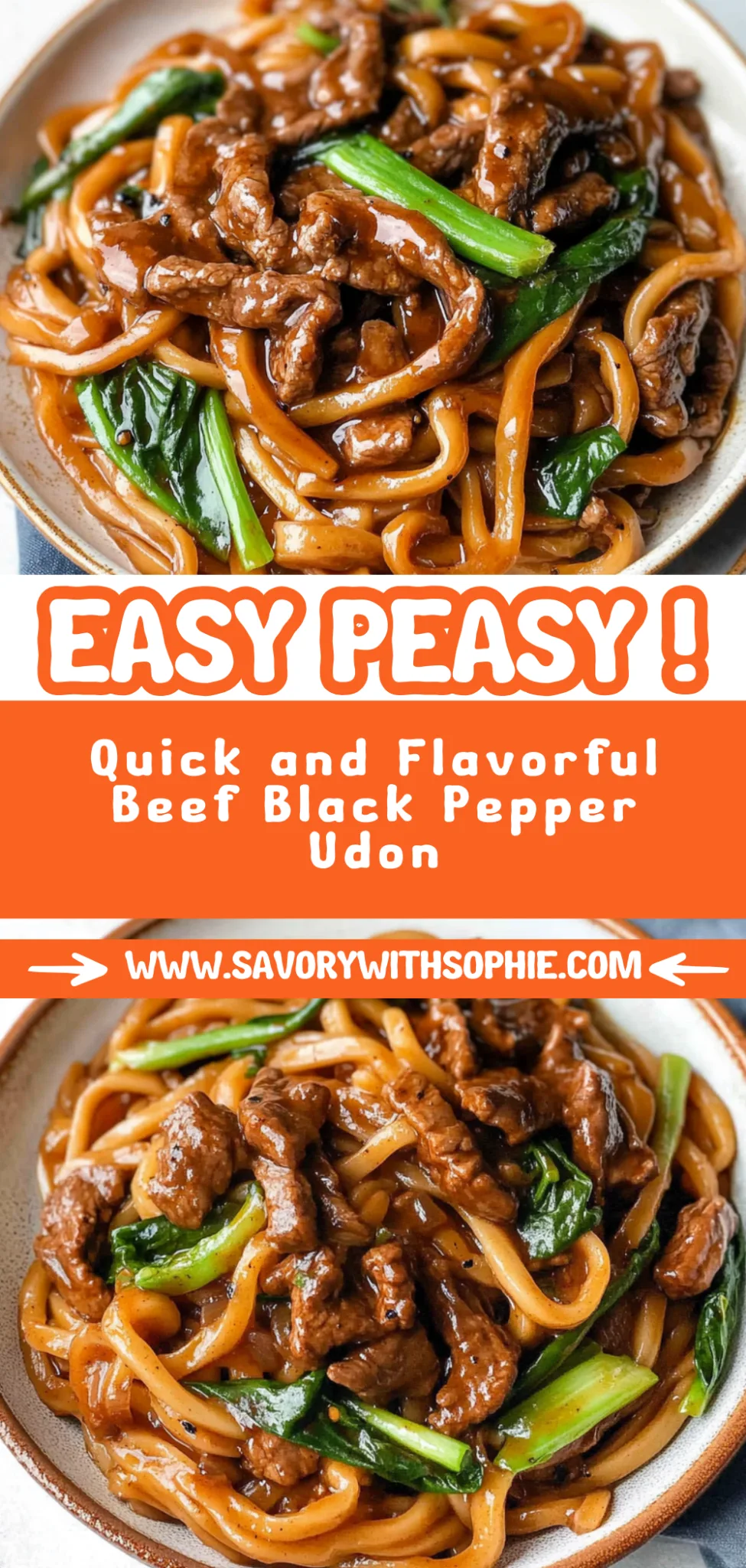
Are you ready to see how straightforward it is to make the Quick and Flavorful Beef Black Pepper Udon of your dreams??
1. PREPARE THE INGREDIENTS
Let’s set the stage for a delicious dish by prepping everything you’ll need.
1. Cook – Begin by cooking the udon noodles according to package instructions. Once cooked, drain them well and set aside while you prepare the rest of your ingredients.
2. Slice – Take your beef sirloin and slice it thinly against the grain. This technique helps keep the beef tender when cooked, so don’t skip this step!
3. Prepare – Next, slice the bell pepper into thin strips and cut the broccoli into bite-sized florets. By prepping these veggies now, they’ll cook evenly and quickly when added to your stir-fry.
HANDY TIPS
- If using frozen udon noodles, ensure they are thawed before cooking for even results.
- Slicing against the grain is essential for tenderness; if unsure, observe the grain direction on the beef.
2. COOK THE BEEF AND VEGETABLES
It’s time to bring some heat!
4. Heat – In a large skillet, heat vegetable oil over medium-high heat until shimmering. This will create a non-stick surface that helps achieve a beautiful sear on your beef.
5. Add – Once the oil is hot, add in the sliced beef and cook for about 3-4 minutes until browned all over. You want that gorgeous color; it adds flavor!
6. Toss – Now add in the sliced bell pepper and broccoli florets. Cook everything together for another 3-4 minutes until the vegetables are tender yet still vibrant.
HANDY TIPS
- Don’t overcrowd the pan; if necessary, cook in batches to ensure proper browning of the beef.
- For an extra kick, consider adding a pinch of red pepper flakes along with your vegetables!
3. COMBINE AND SERVE
The grand finale awaits—time to bring it all together!
7. Mix – In a small bowl, whisk together soy sauce, freshly ground black pepper, oyster sauce, sesame oil, and cornstarch mixed with water until smooth. This will be your robust sauce!
8. Pour – Pour this sauce over the beef and vegetables in the skillet, stirring gently to coat everything evenly. The sauce should start thickening slightly as it heats through—yum!
9. Add – Toss in those cooked udon noodles you set aside earlier, mixing everything thoroughly until heated through and coated with that delicious sauce.
10. Serve – Plate up your dish while it’s hot! For an extra touch of flavor, garnish with additional black pepper if desired.
HANDY TIPS
- Feel free to adjust the amount of black pepper based on your taste preference—some love it spicy!
- Leftovers? Store them in an airtight container for up to two days; just reheat gently on the stove.
You’ve just whipped up a stunning dish of Quick and Flavorful Beef Black Pepper Udon that’s bursting with flavor! Perfectly tender beef paired with chewy udon noodles enveloped in a rich black pepper sauce? Yes please! I can’t wait for you to enjoy this delightful meal! – Nagi x
FAQ – Quick and Flavorful Beef Black Pepper Udon
How long can I store leftover Beef Black Pepper Udon?
Leftover Beef Black Pepper Udon can be stored in an airtight container in the refrigerator for up to 3 days. After that, the texture and flavor may start to decline, and I’d rate it at 80% as good on day 4. When reheating, you might want to add a splash of water or a bit more soy sauce to help revive the noodles!
⏰ Can I skip cooking the udon noodles separately?
No, you can’t skip this step! Cooking the udon noodles according to package instructions ensures they are perfectly chewy and absorb the flavors from the sauce better. If you toss uncooked noodles directly into the skillet with everything else, they won’t cook evenly and will absorb too much sauce, making them gummy instead of delightful.
❄️ Can I freeze Beef Black Pepper Udon?
Yes, you can freeze Beef Black Pepper Udon! However, I recommend freezing only the beef and sauce mixture separately from the udon noodles. The noodles have a tendency to become mushy when thawed. To freeze:
- Let the dish cool completely.
- Place the beef and sauce in a freezer-safe container.
- For udon, store it in another container.
When you’re ready to eat, thaw the beef overnight in the fridge and reheat on the stove while cooking fresh udon noodles.
🌱 Can this dish be made gluten-free?
Absolutely! To make a gluten-free version of Beef Black Pepper Udon, simply use gluten-free udon noodles (they are available at most Asian grocery stores) and substitute soy sauce with tamari. This way, you’ll still enjoy all those delicious flavors without any gluten!
🔄 What can I substitute for oyster sauce?
If you’re looking for a substitute for oyster sauce, you can use hoisin sauce for a similar sweetness or a mixture of soy sauce with a bit of sugar if you prefer something closer in flavor profile. Another great option is mushroom sauce if you’re aiming for vegetarian-friendly alternatives—just keep in mind that it may alter the flavor slightly.
🤔 Why do I need to slice beef against the grain?
Slicing beef against the grain is crucial because it shortens the muscle fibers, resulting in more tender bites. If you slice with the grain instead, you’ll end up with chewy pieces that are hard to eat. Trust me; there’s nothing worse than tough beef ruining your dinner experience!
🌶️ Can I add more vegetables or proteins?
Yes! This recipe is very versatile. Feel free to add other vegetables like snap peas or carrots for extra crunch and color. You can also swap out beef for chicken or tofu depending on your preference—just adjust cooking times accordingly since chicken might take a bit longer to cook through than beef!
Troubleshooting
I will continue to add more to this Troubleshooting section as I start seeing questions coming through from people who have made the recipe.
Troubleshooting tips
“My udon noodles turned out mushy! 😩”
- You might have overcooked the udon noodles according to the package instructions, which can make them too soft and mushy. Always check for the recommended cooking time and test for doneness a minute or two before it’s up.
- If you didn’t drain the noodles well after cooking, excess water can make your dish watery. Make sure to drain them thoroughly before adding them to the skillet!
I bet they were still YUM though!
“The beef came out tough and dry!” 😭
- If you sliced the beef sirloin too thick, it may not have cooked through properly, resulting in a chewy texture. Aim for slices that are about 1/4 inch thick for tenderness.
- Cooking the beef on too high a heat without sufficient oil could lead to quick browning on the outside while leaving it underdone inside. Ensure you’re using medium-high heat with enough oil to keep things juicy!
I bet they were still YUM though!
“My sauce ended up too runny!” 😳
- If you didn’t mix the cornstarch thoroughly with water before adding it to the sauce, it may not thicken properly. Make sure to stir until smooth before incorporating it into your mixture.
- Adding too much liquid from the vegetables can dilute your sauce. Be careful not to add excess moisture when cooking your bell peppers and broccoli!
I bet they were still YUM though!
“The veggies were overcooked and mushy!” 🥲
- Cooking the bell pepper and broccoli for too long can cause them to lose their crunch and become mushy. Stick to 3-4 minutes max for tender-crisp results.
- If your skillet was overcrowded, steam rather than sautéing can occur, leading to overly soft veggies. Cook in batches if necessary—your veggies will thank you!
I bet they were still YUM though!